In today’s fast-changing job market, understanding the “five stages of career development” is more than just good advice it’s a strategy for long-term success. Whether you’re just entering the workforce or making a mid-career shift, knowing where you stand can help you move forward with clarity and confidence.
This article breaks down the five stages of career development in a practical, easy-to-understand way. By the end, you’ll not only know what each stage involves but also how to recognize your current stage and what actions to take next.
Understanding Career Development Holistically
You might hear the term “career development” and think it’s just about climbing the corporate ladder or switching jobs, but it’s actually much deeper. “Career development” is an ongoing journey of learning, self-discovery, and strategic planning that evolves throughout your working life.
It includes far more than your job title. It’s about figuring out who you are, what you truly want from your work, and where you’re headed. It’s about developing the skills, mindset, and network to keep growingardless of the jobs or roles you take on.
If your career were a story, career development would be the entire plot, not just the final chapter.
Why the Five Stages Matter in Today’s Job Market
With industries evolving rapidly and job roles being redefined by technology, people who plan and adapt their careers intentionally are more likely to stay fulfilled and employable.
Understanding which stage you’re in can help you:
- Make smarter decisions about job changes
- Identify where you’re stuck (and why)
- Take action with clear purpose instead of just reacting
As productivity coach Maya Delaney puts it, “You can’t optimize what you don’t understand.” When you know what stage you’re in, you can move forward with intention.
The Five Stages of Career Development
Each of the five stages plays a key role in shaping your overall career. Let’s walk through them now, using real-world examples and practical tips to help you apply them.
Read also – Why Interview Skills Are Important
Stage 1: Self-Assessment
At this starting point, you’re figuring out your personal compass. You’re asking important questions like:
- What do I value most in my life and work?
- What are my natural strengths?
- What kind of roles or environments energize me?
Many people overlook this stage, rushing to find a job without understanding what truly suits them. However self-assessment sets the foundation for all future decisions.
How to Practice Self-Assessment
- Reflect on past work experiences: What felt exciting? What drained you?
- Use tools like StrengthsFinder, Myers-Briggs, or the Holland Code to get insights.
- Journal about your interests, fears, and goals.
Action Tip: Create a personal SWOT analysis—think through your Strengths, Weaknesses, Opportunities, and Threats related to your career.
Stage 2: Exploration
This is the “what if?” phase. You begin looking into different career paths, industries, and roles that align with what you’ve discovered about yourself. Think research, not decisions—yet.
Here’s where informational interviews, job shadowing, internships, online courses, or even volunteering can make a difference.
Analogy: Think of this stage like “tasting samples at a buffet” You’re not committing yet, but you’re learning what you like and what you don’t.
Stage 3: Preparation
Once you’ve explored your options and narrowed down your interests, it’s time to prepare. This stage is where you translate curiosity into capability. You’re no longer just asking “What do I want to do?”, you’re now asking, “How do I get there?”
This often means:
- Gaining necessary education or certifications
- Building relevant skills (both hard and soft)
- Updating your resume or LinkedIn profile
- Creating a realistic career development plan
Preparation is also about filling gaps. Maybe you want to transition into a tech role but lack experience with programming. Or you’re eyeing leadership roles and realize your soft skills need work. This is the perfect time to address those gaps with focused action.
Tip from Career Coach Maya Delaney:
“Preparation is the phase where you build your runway. Don’t skip steps trying to take off faster, your future stability depends on it.”
Don’t Forget Mentorship
Connecting with someone who’s already doing what you aspire to do can speed up your learning curve and help you avoid costly mistakes. Even one good conversation can clarify months of overthinking.
Action Tip: Make a skill-building list:
- What do I need to learn?
- Who can help me?
- What free and paid resources are available?
Read also – What Salary is Middle Class in the UK?
Stage 4: Implementation
This is the “go time” phase of your career development. Now that you’ve done the self-assessment, explored your options, and prepared, you’re ready to put your plan into action. This usually looks like actively applying for roles, networking with intention, crafting your elevator pitch, and attending interviews.
But implementation isn’t just about job hunting. It may also mean launching a side hustle, starting your own business, or negotiating a promotion within your current company.
What to Focus on in the Implementation Stage:
Here’s a quick checklist:
1. Optimize your resume and LinkedIn profile to match your target roles
2. Apply consistently, you may need to get comfortable with rejection
3. Use networking as a long-game strategy, not just when you need a job
4. Prepare thoughtful answers to behavioral interview questions
5. Review and refine your online presence
Mindset Matters:
Rejection is normal at this stage. Don’t let “no” stop your momentum. Keep going, keep learning, and adjust your strategy as needed. Many people find themselves discouraged here—but remember, each application or conversation is a step forward.
Stage 5: Advancement / Growth
You’ve landed the role, built a foundation, and are now focused on **growth**, not just movement.
Advancement might mean climbing the ladder into management, but it could also mean deepening your expertise, shifting departments, or becoming a cross-functional contributor. In today’s world, “up isn’t the only direction that counts.”
Ways to Grow in This Stage:
- Seek out stretch assignments or leadership roles
- Develop long-term goals for where you want to go next
- Consider professional certifications or ongoing education
- Ask for regular feedback and use it to improve
- Learn how to manage up and communicate strategically
It’s also key to continue “self-assessing” and stay open to future change. The most fulfilled professionals often revisit earlier stages, especially self-assessment and exploration, as they progress.
Career Development in Different Career Path
Career development looks different depending on your industry. For example:
- In tech, growth may focus more on skill stacking and project ownership
- In healthcare, the path is usually defined by formal licenses and roles
- For creatives, portfolios, freelancer networks, and client experience often drive progress
If you’re in a nontraditional path or the gig economy, you may loop through the stages multiple times faster, especially between projects or contracts.
This flexibility isn’t a flaw—it’s a superpower.
Career Development Is Not Always Linear
Despite how neat the stages sound on paper, real life rarely plays by the rules. You might leap from stage 1 (self-assessment) to stage 4 (implementation) because of a sudden opportunity. Or, you might reach stage 5 (growth) and realize you’re unfulfilled, prompting another round of exploration.
That’s okay.
Think of Career Development as a Spiral, Not a Ladder
Instead of moving up one rung at a time, picture a spiral staircase. You’re rising, but you often come around to familiar themes—each time with more perspective.
Top Tools for Every Stage of Career Development
Whether you’re in self-assessment or actively seeking growth, the right tools can accelerate your journey. Here’s a breakdown of resources matched to each career development stage.
Tools for self-Assessment
- 16 Personalities.com: Personality testing to reveal work preferences
- VIA Character Strengths Survey: Discover your core values
- Journaling apps like Day One or Reflectly: Great for tracking internal clarity
For career Exploration:
- LinkedIn Career Explorer: Discover unexpected roles that match your skills
- CareerOneStop.org: Government-backed platform with job profiles and salary data
- Meetup.com: Attend industry events and panels for real-world exposure
Skill Preparation:
- Coursera, Udemy, or Khan Academy: Affordable ways to skill up.
- Notion or Trello: Great for building a learning or action roadmap MentorCruise or LinkedIn mentoring*: Connect with industry mentors
Career Implementation:
- Jobscan: Optimize your resume for ATS systems
- Canva: Design standout resumes or portfolios Interviewing.io or Pramp*: Practice mock interviews
Continuous Growth:
- Toastmasters International: Improve leadership and communication
- Harvard ManageMentor or MasterClass: Learn from proven leadersSlack communities and niche Discord groups: Stay current and grow your network
Pro Tip: Don’t try to use all tools at once. Match your tools to your current stage to stay focused and avoid overwhelm.
How to Create Your Personal Career Roadmap
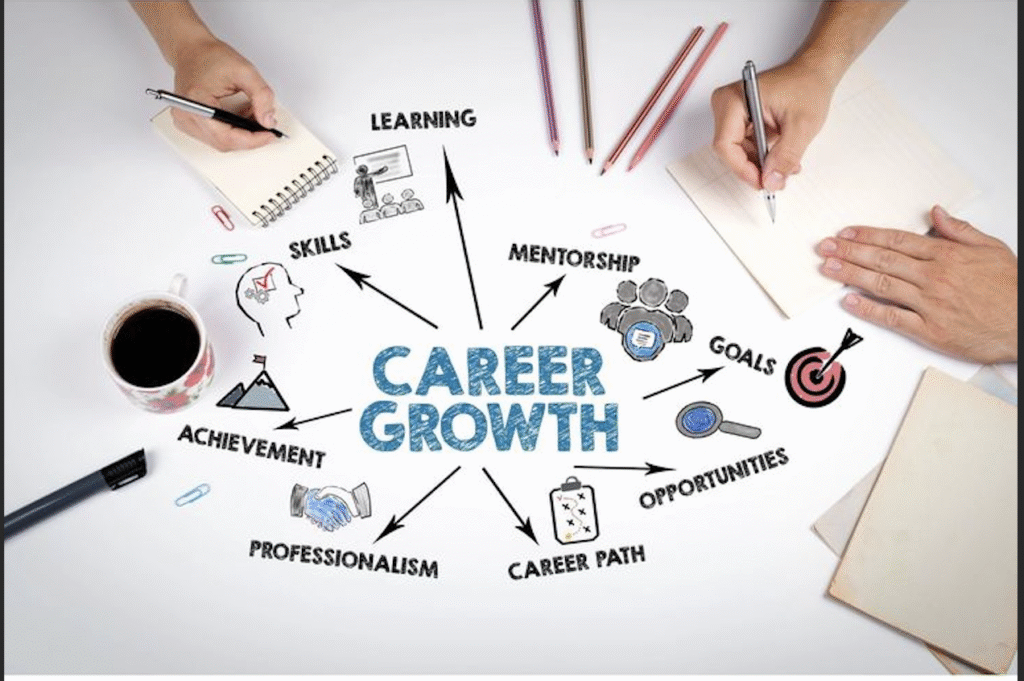
A personal roadmap turns nebulous goals into actionable steps. It gives you a destination, milestones, and accountability built in.
Step-by-Step to Create Your Career Roadmap:
- Write your long-term vision (e.g., “Lead a healthcare innovation team in 10 years”)
- Break it down into 3–5 short-term goals
- For each goal, list supporting skills, tools, and action
- Identify potential blockers and how you’ll overcome them
- Set check-in dates (every 3–6 months) to evaluate your progress
Remember: a great roadmap is flexible. Life happens. The goal is direction, not rigidit
Productivity Coach Insight: Stay Agile, Not Rigid
Productivity coach Maya Delaney suggests:
“Treat your career like a startup, develop, test, iterate. Staying curious keeps you relevant.”
Agility helps you adapt quickly to job market shifts, integrate new interests, or capitalize on unexpected opportunities. The strongest careers are often built by those who respond smartly to change.
Common Mistakes People Make in Career Development
Even ambitious professionals run into pitfalls. Awareness leads to avoidance, so here are a few to watch out for:
- Skipping self-assessment and applying randomly to job boards
- Rushing through preparation** due to fear of missing out
- Confusing busyness with progress during implementation
- Believing growth only comes from vertical moves
- Staying in toxic environments because of fear or inertia
If you’ve made any of these, don’t beat yourself up. Recognize them, reset, and re-engage—refined and more focused.
How Companies Support (or Hinder) Career Development
Some organizations embrace career development. Others see it as optional or even a threat. Here are signs your company supports your growth:
- Offers internal training, tuition support, or mentorship
- Provides career path discussions and development plans Encourages lateral movement and upskilling.
- Champions leadership from all levels of the organization
If you’re not seeing this, it may be time to move into the implementation stage—externally.
Future-Proofing Your Career Development Journey
The working world is evolving. AI, automation, hybrid work, and global competition are changing career landscapes.
Here’s how to stay ahead:
- Reskill regularly**: Even an hour per week of learning adds up
- Follow industry trends** and thought leaders
- Invest in transferable skills** like communication, adaptability, and emotional intelligence
- Stay open to rethinking your role** in light of changing priorities or tech disruption
Continuous career development is no longer optional.
It’s a survival skill, and a path to meaningful, energized work.
Conclusion
Career development isn’t a one-time event. It’s a dynamic process that unfolds in five powerful stages:
- Self-assessment
- Exploration
- Preparation
- Implementation
- Advancement
No matter where you are right now, there’s a next best step. Start by identifying your current stage, then take one intentional action to move forward.
FAQs – What are the Five Stages of Career Development?
Feeling stuck often signals that you’re between the self-assessment and exploration stages. Take time to reflect on what’s missing or misaligned
Yes, but with caution. Skipping self-assessment or preparation can lead to poor fits. Even if you’re clear, revisit the earlier stages for deeper insights.
Check in every 6–12 months or after any major life change. Your goals and values evolve—and your plan should too.
Focus on identifying transferable skills in your self-assessment, then emphasize learning and networking during exploration and preparation.
Absolutely. In fact, freelancers often move through these stages faster and more frequently. A career is a path, not just a position